Why outside is different
Outdoor play isn’t indoor play with more sky. Uneven ground trains balance; open space invites full-speed running that no living room can legally allow; and nature is an endless, self-resetting toybox of sticks, stones, seeds and puddles. Time outside is also the most reliable mood-shifter in the parenting toolkit — for children and, honestly, for the grown-ups supervising from the garden chair. The games below need almost no equipment on purpose.
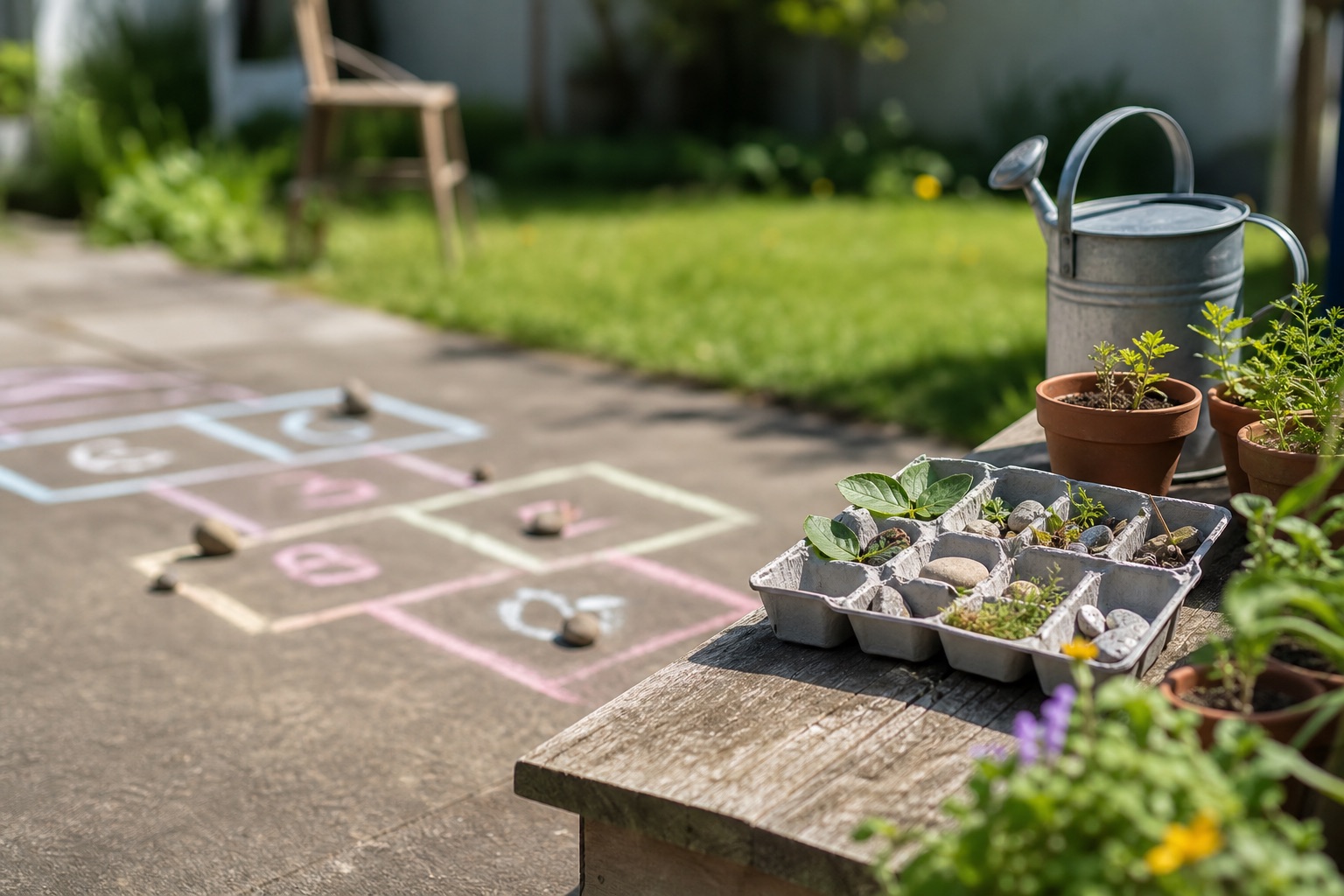
Nature treasure hunt
You need: an egg carton, a hand-drawn list · ages 3+
Paint or label carton cups: something smooth, something rough, something yellow, something that used to be alive (leaf, feather), something that smells good. The carton turns a walk into a mission and gives collectors a place for treasure. Preschoolers hunt colors; school-agers graduate to categories like “seed”, “evidence an animal was here”. Pair with the age bands in our activity index.
Classic tag, with a twist menu
You need: legs · ages 4+
Tag survives every generation because it needs nothing. Refresh it with a twist menu written on the fence: freeze tag, tail tag (tuck a sock in every waistband), animal tag (everyone hops like a frog), shadow tag on sunny days. Let a different child choose the twist each round — variety by democracy.
Sidewalk chalk gallery
You need: chalk, pavement · ages 2+
Chalk is the cheapest large-format art medium on earth. Trace bodies and turn them into characters, draw a road system for toy cars, build a hopscotch championship, leave kind messages for neighbors to find. Rain is the eraser, which also teaches a gentle lesson about impermanence. More messy art in arts and crafts.
Puddle science
You need: boots, curiosity · ages 2+
Which puddle is deepest? Which dries first? What floats and what sinks? Does a stick bridge change the flow? Puddles are free field laboratories — a gateway to the easy science experiments that continue at the kitchen table. Wellies mandatory, curiosity provided.
Garden in a pot
You need: a pot, soil, fast seeds (radish, cress, beans) · days to weeks
Cress sprouts in days, radishes in weeks, beans climb a bamboo pole like a race. Give the child ownership: their pot, their watering can, their measuring stick to chart growth. A growth chart drawn on paper is mathematics disguised as pride. Digging, watering and waiting is the full curriculum of patience.
Backyard Olympics
You need: chalk, beanbags, a stopwatch · ages 5+
Design five events — beanbag toss, long jump, ball dribble, obstacle sprint, “artistic gymnastics” freestyle — with points for effort as well as performance. School-agers can run the scoreboard and referee younger siblings, which is leadership practice in a cape. Detailed plans in school-age activities.
Camp in the yard
You need: a tent or tarp, sleeping bags, snacks, a torch · grown-up present
The backyard camp-out is a child’s first great adventure: close enough to home for courage, far enough for legend. Hot chocolate, a torch for shadow puppets, a listening game (“how many night sounds can you count?”). If it rains at midnight, a dignified retreat indoors is part of the story — forts for wet days are in indoor games.
Grown-up tip: “go outside” rarely works; “the first one to find three different leaves wins” always does. Send them out with a mission, not a location. There is a lot of surprising science about why missions work in our learning through play guide.
Dressing the part
The old rule — there is no bad weather, only wrong clothing — is what separates an outdoor family from a hostage one. Keep a basket by the door with boots, raincoats and spare socks per child, low enough for them to reach. Independence in dressing is its own small victory, and it removes your last excuse too. For wet-weather plan Bs, open the rainy-day rescue kit.